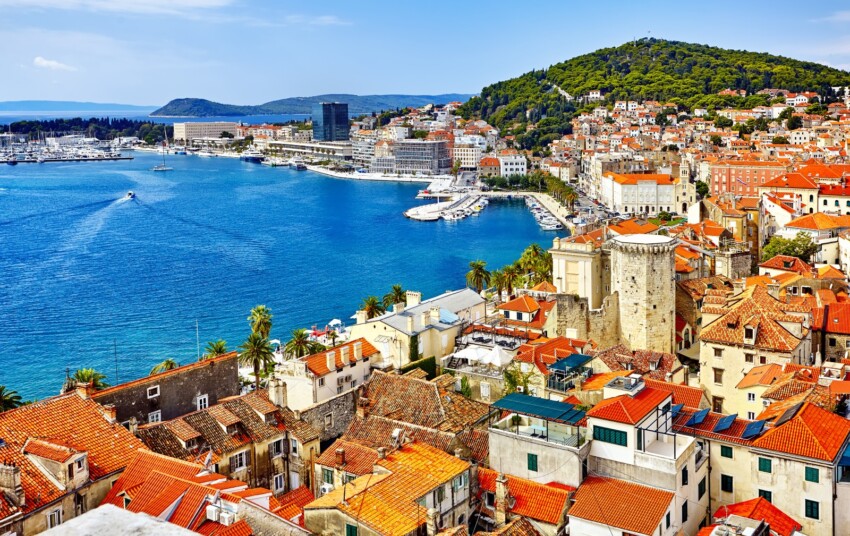
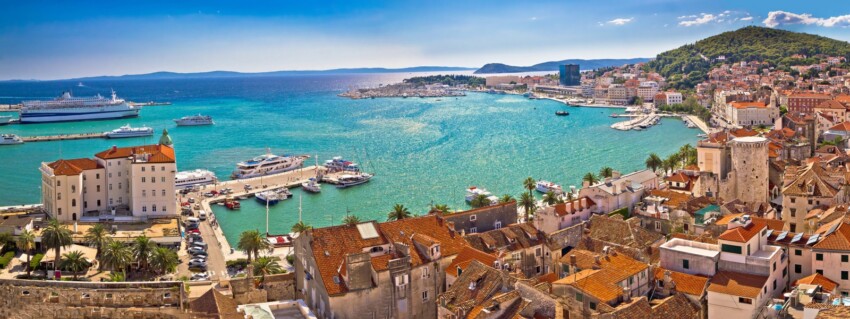
Split is Croatia’s second largest city and an essential stop on an on-the-road holiday in south-central Dalmatia.
It is certainly worth a stop to visit the splendid Diocletian’s Palace, a small city within a city built of fine white stone that creates a striking contrast with the colour of the sea.
The beaches are nearby and easily accessible, but Split has the appeal of a city rather than a seaside resort.
Stroll through the elegant streets of the centre and along the waterfront and take advantage of the many cultural tourism opportunities Split has to offer, with its prestigious festivals, international film and theatre events and traditional folk festivals.
Splendid by day, when the sun goes down Split turns into the queen of the night, with a wide choice of pubs, clubs and discos where you can party till late.
Split’s most famous attraction is Diocletian’s Palace. It forms the beating heart of Split and is one of the best preserved Roman archaeological complexes in the world. Built between 293 and 305 A.D. as an imperial residence, this imposing palace-fortress covers over 30,000 square metres enclosed by mighty walls up to 26 metres high. What makes it extraordinary is not only its architectural magnificence, but the fact that it is still a living organism where some 3,000 people reside today.
The original structure included a division between the southern part, dedicated to the imperial flats and state rooms, and the northern part reserved for servants and military garrisons. This division is still partially legible in the present plan. The four monumental gates named according to precious metals (Aurea, Argentea, Ferrea and Bronzea) allow access to the complex from every cardinal point.
Inside you will find the majestic Peristyle, the ceremonial square surrounded by colonnades, the Cathedral of St. Doimus carved out of the ancient imperial mausoleum, the dungeons used as sets for Game of Thrones, and a maze of alleyways with shops, restaurants and art galleries.
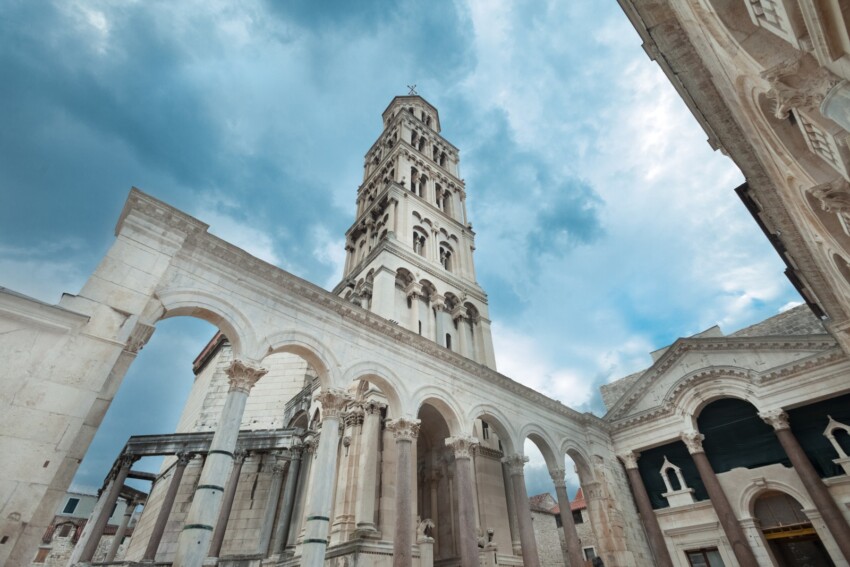
The Cathedral of St Doimus represents one of the most fascinating paradoxes of Christian history: the building originally constructed as the mausoleum of Emperor Diocletian, a notorious persecutor of Christians, was transformed in the 7th century into a cathedral dedicated to St Doimus, a martyred bishop executed by the emperor. This symbolic conversion completed a posthumous revenge when the Christians removed Diocletian’s sarcophagus to replace it with the saint’s relics.
The structure retains the original Roman octagonal plan, bordered by 24 monolithic granite columns imported from Egypt. Inside you can admire the 13th century Romanesque pulpit, magnificent Baroque altars and precious sculptural reliefs believed to depict the faces of Diocletian and his wife Prisca.
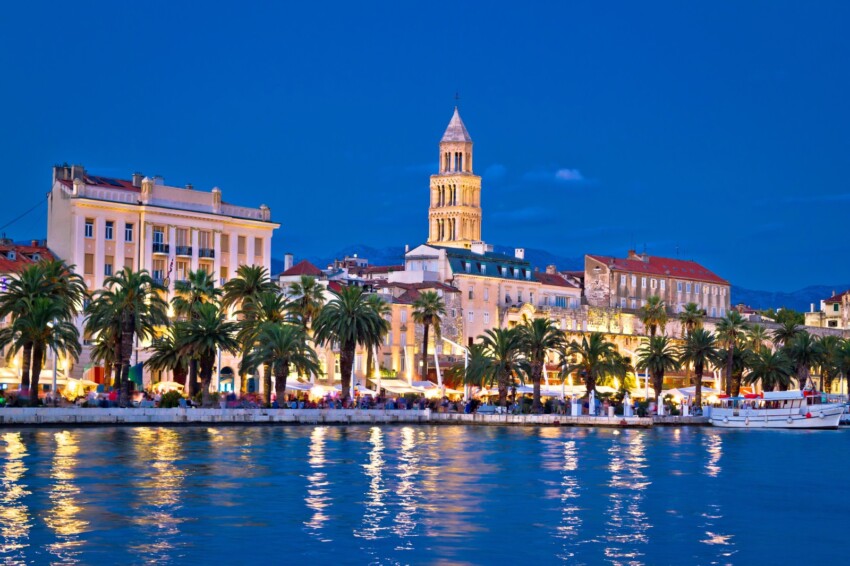
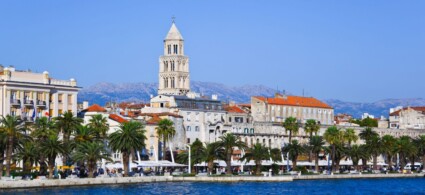
The Bell Tower, built in Romanesque-Gothic style between the 12th and 16th centuries, soars 57 metres beside the cathedral. Climbing the 183 steps of the narrow spiral staircase requires effort, but the 360-degree panoramic view of Split, the harbour and the Dalmatian islands more than repays the effort.
Peristyle
321000 Trg Peristil BB, 21000, Grad, Split, Croatia
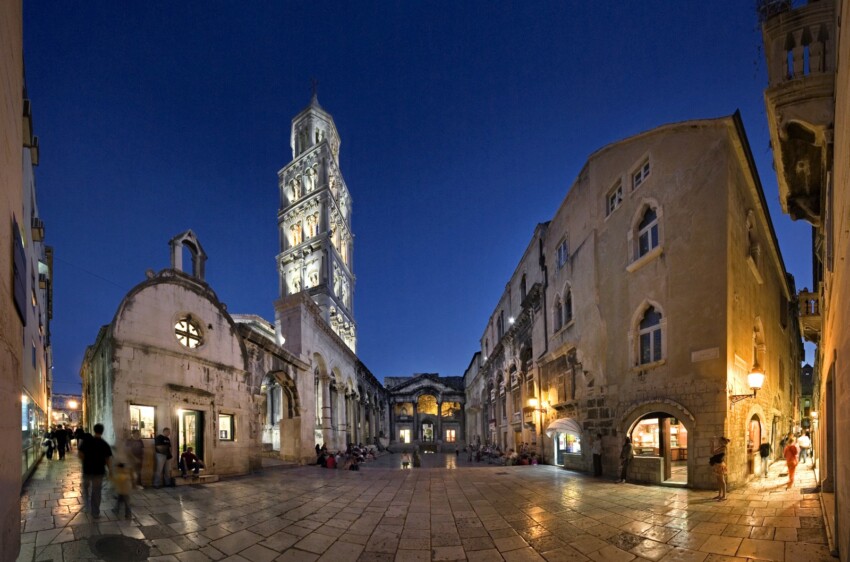
The Peristyle forms the central square of Diocletian’s Palace and is one of the most atmospheric urban spaces in Europe. In Roman times, it served as a ceremonial courtyard where the emperor would appear to his subjects, surrounded by the majestic red granite colonnade that still borders three sides of the square. The original pavement is partially visible, while the columns retain their monumentality despite the two thousand years that have passed.
On the eastern side of the Peristyle is one of the twelve Egyptian sphinxes brought from Egypt by Diocletian, over 3,500 years old and perfectly preserved. This artefact represents the oldest object in Split. During the summer months, the Peristyle is transformed into a natural stage where concerts and performances are held, taking advantage of the exceptional acoustic qualities of the space.
The square is surrounded by cafes that offer the opportunity to sit on the Roman steps while sipping a drink, an experience that allows one to perceive the continuity between past and present. At sunset, when the stones are tinged with a warm honey colour and the elongated shadows create plays of light, the Peristyle reveals all its magic.
The building that today houses the Baptistery originated as the Temple of Jupiter, an integral part of the imperial religious complex built by Diocletian. The transformation into a Christian baptistery took place in the early Christian era, when the need to convert pagan spaces into places of Christian worship led to the intelligent re-use of existing structures. In the 13th century, the baptismal font originally from the cathedral was placed here, a masterpiece of medieval sculpture still used for baptisms today.
At the entrance to the baptistery is another Egyptian sphinx, headless but still impressive for the size and quality of its black granite sculpture. The interior retains remnants of ancient and medieval decoration, with a coffered ceiling dating from the Christian conversion period. The small space of the building creates an intimate and cosy atmosphere, in stark contrast to the monumentality of the Peristyle outside. The walls show traces of ancient frescoes and the entrance door is decorated with elaborate wooden carvings dating back to the 13th century.
Riva, the seafront promenade in Split
521.000, Obala Hrvatskog narodnog preporoda 23, 21000, Split, Croatia
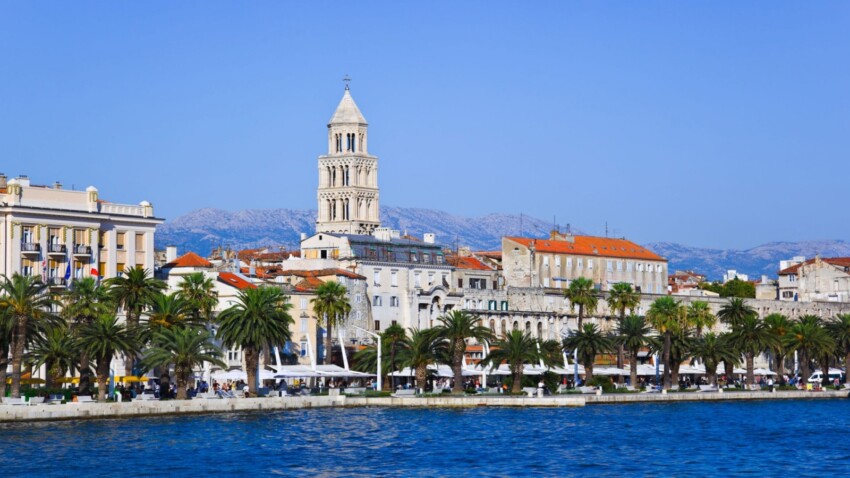
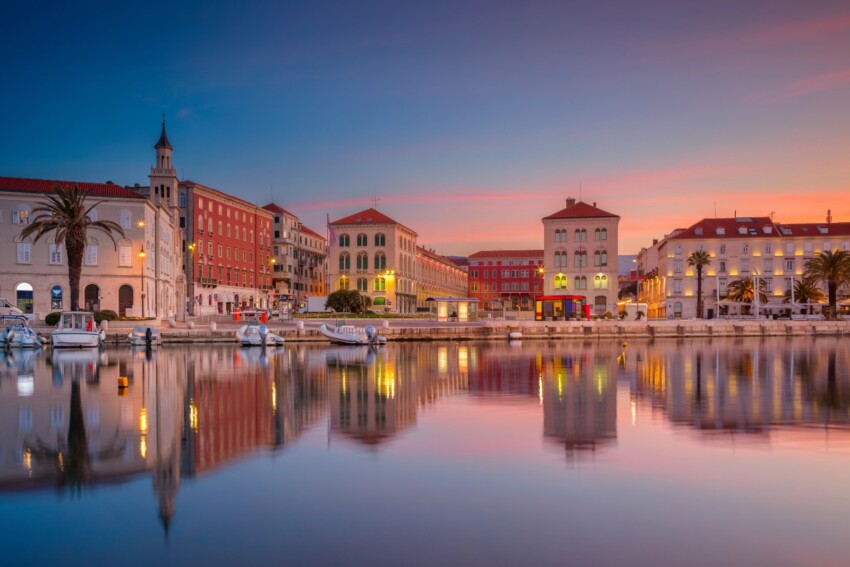
The Riva represents Split’s good living room, the green promenade where Split residents and tourists gather for walks, aperitifs and simply to enjoy the view of the harbour. This wide pedestrian promenade lined with palm trees stretches along the south coast of the old town, separating the ancient walls of Diocletian’s Palace from the Adriatic. Renovations in 2007 transformed the Riva into one of the most elegant public spaces in Dalmatia, with white stone paving reflecting the sunlight and creating a Mediterranean atmosphere.
Along the Riva are cafes, ice cream parlours and restaurants with outdoor tables where you can enjoy local specialities while watching the bustle of people. The promenade particularly comes alive at sunset and on summer evenings, when street musicians and artists perform, creating a festive atmosphere. From the promenade, there is a spectacular view of the harbour with ferries departing for the Dalmatian islands, sailboats moored and the Mosor mountains rising on the horizon.
The Riva is also the starting point for boat trips, harbour tours and connections to the islands. During the summer, it hosts cultural events, markets and manifestations that attract thousands of people, confirming it as the heart of Split’s social life.
Statue of Gregory of Nin
6Ul. kralja Tomislava 12, 21000, Splitska, Croatia
The monumental Statue of Gregory of Nin, a work by the famous Croatian sculptor Ivan Meštrović created in 1929, stands imposingly in front of the Golden Gate of Diocletian’s Palace. Approximately 8 metres high, the bronze statue represents the medieval bishop Grgur Ninski, a key figure in Croatian history for having promoted the use of the Slavonic language and Glagolitic script in religious services, opposing the exclusive use of Latin imposed by Rome.
Meštrović’s depiction is powerful and dramatic: the bishop is caught in a moment of reflection or prayer, his robes falling into monumental folds and an expression of determination on his face. A tradition particularly favoured by visitors is that rubbing the statue’s left big toe brings good luck, and indeed you can see how the toe is polished by the continuous touch of thousands of hands.
The statue was not always in this position: originally placed in the Peristyle, it was moved during the period of World War II and finally repositioned in its current location in 1957. The square where the statue stands serves as a meeting and orientation point for visitors, marking the boundary between the medieval old town and the northern entrance to the palace.
Meštrović Gallery
7Šetalište Ivana Meštrovića 46, 21000, Split, Croatia
The Meštrović Gallery is one of Croatia’s most significant art museums, devoted entirely to the works of Ivan Meštrović, considered the most important Croatian sculptor of the 20th century. Housed in an elegant neoclassical villa designed by the artist himself as his residence in the 1930s, the gallery is situated on a hill overlooking Split, offering splendid panoramic views of the sea.
In 1952 Meštrović generously donated the villa and 132 works of art to the Croatian people, laying the foundation for the creation of the museum gallery. The collection on display spans the artist’s entire output: sculptures in marble, bronze and wood, drawings, architectural plans and preparatory sketches. The works testify to Meštrović’s stylistic evolution, from classical and Viennese Secession influences to more mature works characterised by a monumental and powerful language. Particularly impressive are the religious sculptures that show the artist’s deep spirituality.
Also part of the museum complex is the nearby Kaštilac Church, decorated with wooden carvings depicting scenes from the life of Jesus. The gallery is located outside the historical centre but is easily accessible by bus or a pleasant walk along the sea.
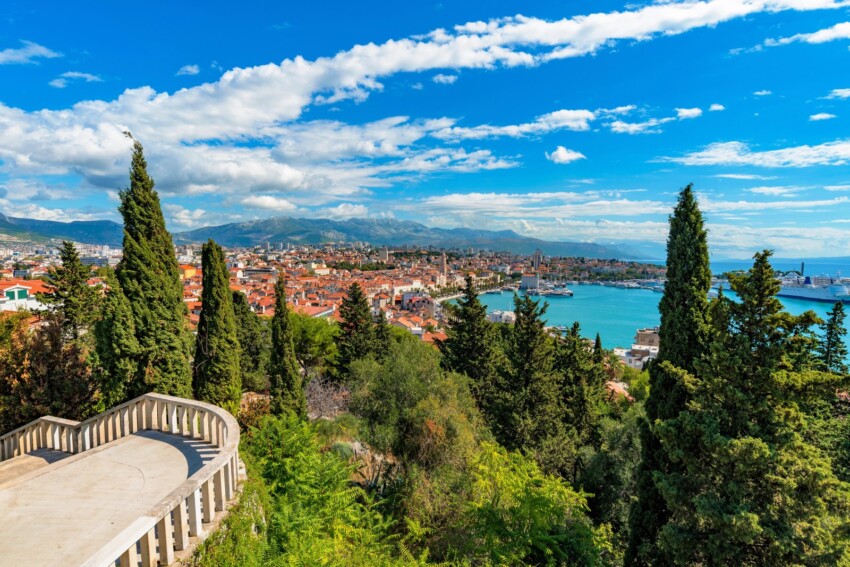
Marjan Hill is Split’s green lung, a 178-metre-high natural oasis jutting out into the sea to the west of the old town. This forest park of over 300 hectares has been declared a nature reserve and offers an escape from the urban hustle and bustle just a few minutes’ walk from Diocletian’s Palace. Paths winding among Aleppo pines, cypresses and Mediterranean scrub are popular with runners, cyclists and families seeking shade and fresh air on hot summer days.
From the top of Marjan there is a spectacular view of Split, the surrounding islands and the Dalmatian coastline stretching as far as the eye can see. Several well-equipped viewpoints allow you to pause and contemplate the landscape, while small chapels and medieval churches dot the park, testifying to the spiritual role this hill has always played for the people of Split. On the western side are some of Split’s most beautiful beaches, such as Kašjuni and Bene, which can be reached via paths that descend steeply to the sea.
The hill is also home to a small zoo, sports fields, a climbing centre and panoramic cafes. A system of well-marked trails allows for hikes of varying difficulty, from simple coastal walks to more challenging paths that traverse the entire length of the park. Marjan is particularly magical at sunset, when the grazing light transforms the vegetation and the sea into a spectacle of colours.
Split’s Green Market, known locally as Pazar, is the beating heart of everyday city life and an authentic experience not to be missed by visitors. Located just outside the Silver Gate of Diocletian’s Palace, this lively open-air market operates every morning from dawn until early afternoon, offering a kaleidoscope of Dalmatian colours, scents and flavours.
The stalls overflow with local produce: seasonal fruit and vegetables grown nearby, artisanal cheeses from the Dalmatian hinterland, extra virgin olive oil fromIstria and the islands, honey scented with Mediterranean herbs, dried lavender, ham and bacon smoked according to ancient recipes. Fresh fish, caught the night before in the Adriatic, occupies a dedicated section where you can find sea bass, gilthead bream, scampi and the famous brudet (fish soup) prepared by some stalls.
The market also offers handicraft products: woven baskets, lavender bags, handmade soaps and olive wood objects. Visiting the Pazar early in the morning means immersing yourself in Split authenticity, observing the local social dynamics and perhaps buying ingredients for a picnic on the beach or an aperitif in a flat.
The People’s Square, simply called Pjaca by the people of Split, forms the centre of the medieval city and is an important historical and social landmark. This elongated square developed outside the walls of Diocletian’s Palace during the medieval period, when Split began to expand beyond the confines of the Roman fortress. Surrounded by elegant Gothic and Renaissance palaces, Pjaca bears witness to the centuries of Venetian rule through its architecture reminiscent of the Serenissima.
On the northern side of the square stands the Gothic-style Town Hall, which today houses the Ethnographic Museum, while theold clock tower still marks the town’s time with its medieval mechanism. Venetian arches and Renaissance friezes decorate the façades of the buildings surrounding the square, creating an elegant atmosphere reminiscent of the common Adriatic origins of Venice and Split. The white stone pavement reflects the sunlight, while cafes and restaurants with outdoor tables invite you to pause and observe the daily hustle and bustle.
Pjaca particularly comes alive during seasonal markets, when stalls selling handicrafts and gastronomic specialities fill the space, creating a festive atmosphere. During the summer, the square hosts concerts and cultural events, confirming it as one of the most vital public spaces in the old town.
The Game of Thrones Museum is a must-see attraction for fans of the popular HBO TV series. Located in a historical villa along Šetalište Ivana Meštrovića, near the Meštrović Gallery, the museum displays a rich collection of original costumes, armour, weapons and props used in filming.
You can admire up close the clothes worn by protagonists such as Daenerys Targaryen, Cersei Lannister and Jon Snow, explore faithful reconstructions of iconic environments from the series and even sit on a replica of the Iron Throne for the perfect souvenir photo. The exhibition is enriched by explanatory panels telling the behind-the-scenes story of filming in Split and other Croatian locations such as Dubrovnik, with maps illustrating where the most memorable scenes were shot.
Particularly interesting are the sections dedicated to special effects and the processes of costume and weapon creation, which reveal the meticulous craftsmanship behind the production. The museum also offers interactive experiences with touch screens and exclusive videos featuring interviews with the cast and crew. The visit lasts about an hour and is a perfect complement to the tour of the Split locations used to portray Meereen.
The city of Split is home to beautiful beaches, both sandy and pebbly, lapped by a truly crystal-clear sea that has repeatedly been awarded the Blue Flag title. This part of the Croatian coastline is characterised by the mistral wind, which blows gently and makes it pleasant and not too hot to be on the beach.
Many of the city’s beaches are popular with families with children because they are easy to reach (by car or on foot), have slowly sloping seabeds and have beaches with all facilities. The Split coastline stretches for almost 10 km in the southernmost part of the city from the port to the village of Podstrana, while all around Marjan Mountain there are numerous rocky beaches surrounded by green vegetation.
Bačvice Beach is the most famous and popular beach in Split, located just a 10-minute walk from the old town along the coastal promenade that continues from the Riva. This sandy beach with shallow, gradual shallows is particularly popular with families with small children and those wishing to swim in calm waters. The sheltered bay offers protection from the winds, ensuring calm seas even when other beaches are rough.
Bačvice is famous not only for its bathing qualities but also as the birthplace of picigin, a typical Split water sport that consists of holding a small ball in the air by hitting it with your hands while in shallow water. During the summer you can watch teams of players perform spectacular acrobatics, and every January the world picigin championship is held, attracting teams from all over Croatia.
The beach is fully equipped with sunbeds and umbrellas for hire, showers, changing rooms and toilets. The promenade along Bačvice is lined with cafes, ice cream parlours, restaurants and beach bars that stay open late into the night in summer, turning the beach into one of the centres of Split nightlife. The area is particularly popular with young people who gather here for sunset aperitifs and evening parties. Bačvice has been awarded the Blue Flag, an international certification guaranteeing the quality of the water and services offered.
Other beaches
Other popular beaches are Ovcice and Firule, which are characterised by sand and pebble beaches, shallow waters and numerous restaurants. Young people, on the other hand, also love to frequent the Kastelet beach, which is located at the foot of Mount Marjan and is a pebble beach with several clubs right on the beach offering sandwiches, drinks and musical entertainment.
Approximately 1.5 km south of Ovcice beach is Znjan beach, which is a recently established beach and stretches for about 1 km with areas of sand, pebbles and pebbles. Znjan has well-equipped lidos, bars, services and even a large car park and is a very nice and modern part of Split.
Map
In the following map you can see the location of the main places of interest mentioned in this article.
Day trips from Split
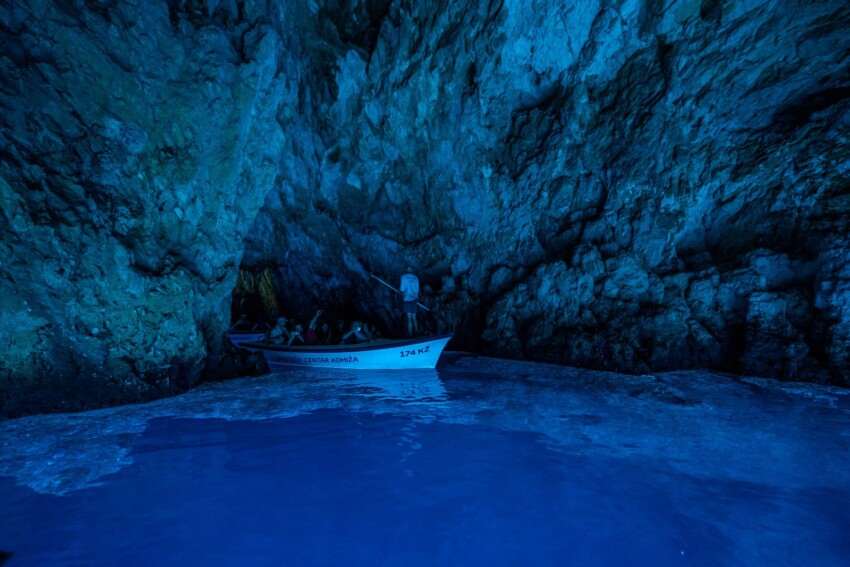
The Blue Cave in Bisevo
Because of its location, Split is an ideal base for exploring both central and southern Dalmatia.
Local tour operators organise numerous excursions and day trips to the Blue Cave in Bisevo, the Krka waterfalls and the famous Zlatni Rat beach on the island of Brac. Another popular excursion is a canoe trip on the Cetina River.
If you want to stay in town, there are plenty of opportunities for recreation and relaxation, with themed attractions for children, thermal spas and thermal baths, sports facilities and shopping.
As a large city, Split offers many more opportunities for cultural events and entertainment than other smaller tourist destinations.
Events and festivals
There are many events and festivals held every year that attract an ever-growing international audience, from prestigious classical music festivals to state-of-the-art electronic music festivals, as well as fairs, film, theatre and dance festivals, sporting events and traditional festivals.
Among the most important annual events in Split are the Split Summer, Mediterranean Film Festival, Ultra Music Festival, Cro Patria, Split Film Festival and Croatia Boat Show.
If you are in town in June, don’t miss the world championship of picigin, a bizarre sport typical of Split in which players compete in the sea by throwing a ball that must never touch the water!
In May there are two important traditional festivals, the Feast of St Doimus and the Feast of the Holy Cross.
Nightlife
Nightlife lovers will find bars and discos open all year round in Split, but it is the summer when Split’s nightlife goes wild, with several clubs open on the beach or along the waterfront.
Evenings generally begin in one of the bars in the centre for a drink with friends, and then continue late into the night in one of the city’s numerous pubs, clubs or discos.
Boat cruises and parties
Boat trips along the Split coastline are a pleasant way to see the city from a different perspective. Numerous tour operators on the Riva offer panoramic tours of the harbour and the urban coastline, allowing you to see Diocletian’s Palace and the old city from the sea.
Particularly popular are the sunset cruises that sail along the waterfront with an aperitif on board, offering spectacular views of the illuminated city. During the summer, boat parties enliven Split’s harbour: party boats with DJs, open bars and live music sail the waters off the city, creating a festive atmosphere without straying too far from the coast.
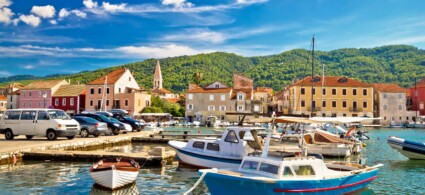
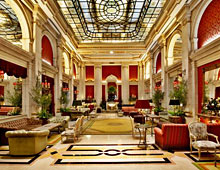
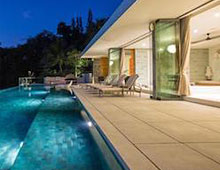
The city of Split is not very big but offers its visitors awide choice of accommodation options. However, choosing where to stay in the city is not easy because it all depends on the type of holiday you want to have.
Those who want to be close to the beach can stay in the Bacvice neighbourhood, which allows not only easy access to the sea but also to the city centre within a few minutes’ walk. Other areas to stay in to be close to the beaches are Znjan, a neighbourhood with many hotels, restaurants and clubs, and Trstenik.
If you are planning a more cultural trip, on the other hand, we recommend sleeping in the old town area where you will find the old city and numerous sites of interest to visit.
We offer best rates If you find it cheaper we refund the price difference.
Free cancellation Most properties allow cancellation without penalty.
We're available 24 hours a day For any problem call Booking.com.
Split is the main hub of central Dalmatia and is a must-visit point for those exploring the Croatian coast and islands.
From Split Airport, located about 25 km from the city centre in Kaštela, you can reach the centre of Split with several options. The shuttle bus (Pleso Prijevoz) leaves coordinated with flight arrivals and takes about 30-40 minutes to get to the central bus station. Taxis from the airport to the centre cost 30-40 euros and take 25-30 minutes. For those travelling in groups, it can be convenient to book a private transfer in advance.
If arriving by sea on ferries connecting Split with Dalmatian islands such as Brač, Hvar, Vis and Korčula, or with Italy, the port is only a 5-10 minute walk from the centre. Upon leaving the terminal, head towards the waterfront (Riva) and from there you will immediately see the walls of Diocletian’s Palace.
Those arriving by car should bear in mind that the city centre is closed to traffic. The nearest car parks are the underground one under the Riva (Garažna ulica) and the Matoševa car park. The rates are quite high, so if you are staying several days consider leaving your car in cheaper peripheral car parks and using public transport. For those arriving from Zagreb (around 380 km, 4 hours’ drive), theA1 motorway connects the two cities directly for a toll of around 20 euros.
Intercity buses arrive at the central station (Autobusni kolodvor), located about 1.5 km from the palace. From here, you can either take local bus numbers 1, 2, 3 or 4, which take you close to the historical centre, or walk 15-20 minutes. Split is well connected by bus with all major Croatian cities and international destinations.
Split Weather
What's the weather at Split? Below are the temperatures and the weather forecast at Split for the next few days.
Friday 6
11°
16°
Saturday 7
11°
16°
Sunday 8
11°
16°
Monday 9
12°
15°
Tuesday 10
11°
15°
Wednesday 11
11°
16°
Where is located Split
Split is Croatia's second largest city in terms of population, after the capital Zagreb. It is situated in the southern part of the country, facing the coasts of the islands of Solta and Brac.


 Hotel
Hotel  Budget accommodations
  Apartments
  Family Hotel
  Luxury Hotel
  Resorts