Vera
Silba - Silba 586
Book now
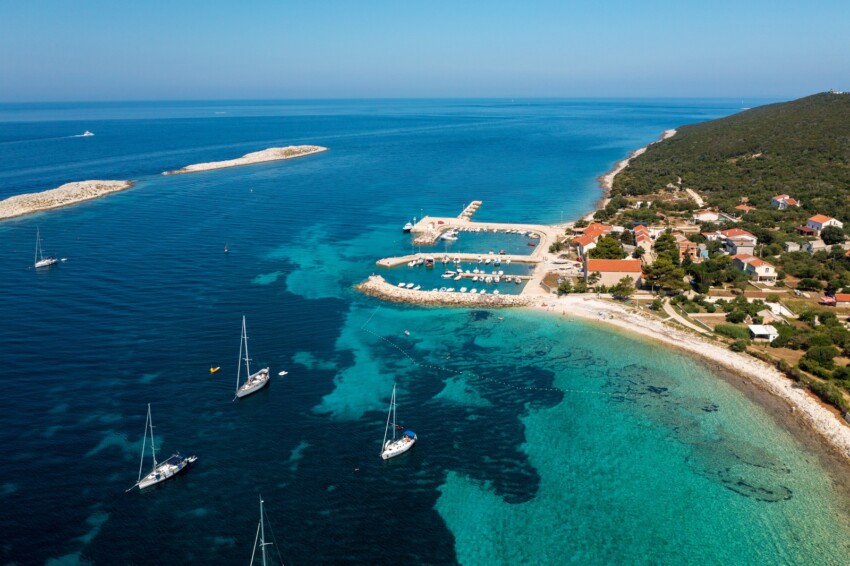
With just 64 permanent inhabitants spread over 9 square kilometres, Premuda represents one of the last unspoilt paradises of the Zadar archipelago. Situated 35 kilometres from the mainland, this 9-kilometre-long and 1-kilometre-wide island is characterised by an atmosphere suspended in time where cars circulate without number plates and the rhythm of life follows the natural cycle of the tides.
The island can only be reached by sea from Zadar, a feature that has preserved its authentic character away from mass tourism. Premuda stretches in a northwest-southeast direction between the islands of Lošinj to the north and Škarda to the south, separated from Silba by the Kvarner Channel.
The island’s morphology is slightly undulating with Vrh peak reaching 90 metres above sea level, the highest point from which there is a 360 degree panoramic view of the Adriatic. The indented coastline, with an indentation coefficient of 2.45, opens up into numerous natural bays offering shelter and crystal-clear sea beds. Evergreen Mediterranean vegetation, centuries-old olive groves and pine forests characterise the landscape, while the red soil typical of the limestone terrain is used by the islanders to enrich their cultivated fields.
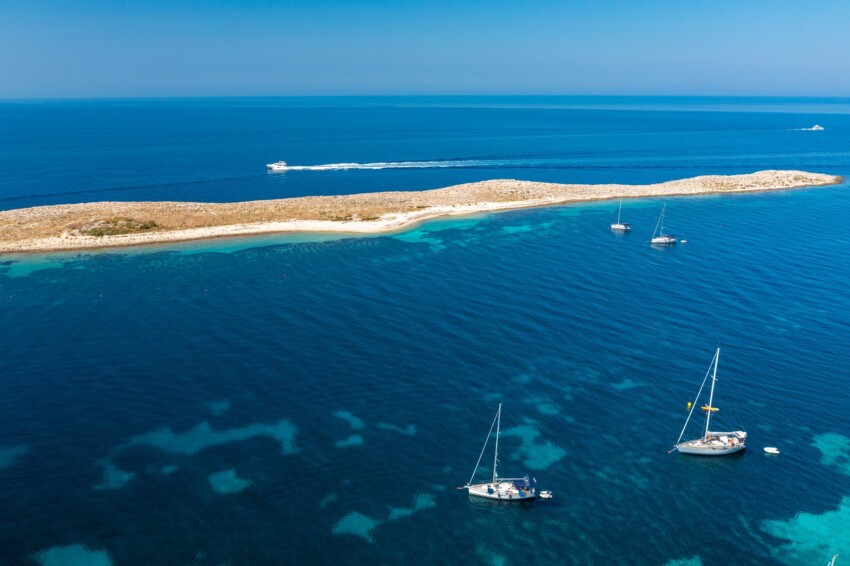
Premuda’s beaches retain a wild and unspoilt character, consisting mainly of smooth white pebbles and natural rocks. The western coastline features steep cliffs that descend into the sea at inclinations of up to 50 degrees, creating spectacular scenery for divers and snorkellers.
The sea takes on crystal-clear turquoise tones thanks to the clear seabed and the purity of the water. Natural bays offer protection from the winds, making bathing possible even when the sea is rough. The absence of bathing establishments and tourist infrastructure guarantees an authentic experience for those seeking tranquillity and direct contact with nature.
The most popular beaches are in the vicinity of the port of Krijal in the south and the port of Loza in the north, which can be easily reached on foot from the town centre. Small coves open up between the rocky promontories and can be reached by short walks along paths through the Mediterranean macchia. Pine forests reach down to the sea in some places, providing natural shade during the hottest hours.
The seabed immediately near the coast lends itself to snorkelling, allowing one to observe colourful fish, sponges and corals without the need for diving equipment. For those who prefer flat rocks where they can lay down their towels, the east coast offers numerous natural platforms with easy access to the sea. The Široka Bay on the west coast is particularly popular due to its sheltered position and calm sea.
During the summer, the waters reach ideal temperatures for long swims, while the excellent visibility of the seabed makes every dive a memorable experience. It is advisable to bring rock shoes to move comfortably on the pebbles and coastal rocks.
The island’s main attraction is undoubtedly the ‘Cathedral’ cave, a spectacular system of underwater caves and tunnels located in Široka Bay on the west coast. This dive site attracts divers from all over the world because of its unique domed shape and the play of light created when the sun’s rays penetrate through the cracks and crevices of the vault. At midday, when the light is perpendicular, the spectacle of shadows and reflections on the turquoise water creates an effect similar to that of the stained glass windows of a Gothic cathedral.
A few kilometres off the shores of Premuda lies the wreck of the SMS Szent István, an Austro-Hungarian battleship sunk in June 1918 by Italian torpedoes during the First World War. The wreck lies at a depth of about 67 metres and is only accessible to experienced divers with advanced certifications. The ship is protected by the Ministry of Culture of the Republic of Croatia and diving is only permitted in the company of authorised diving centres.
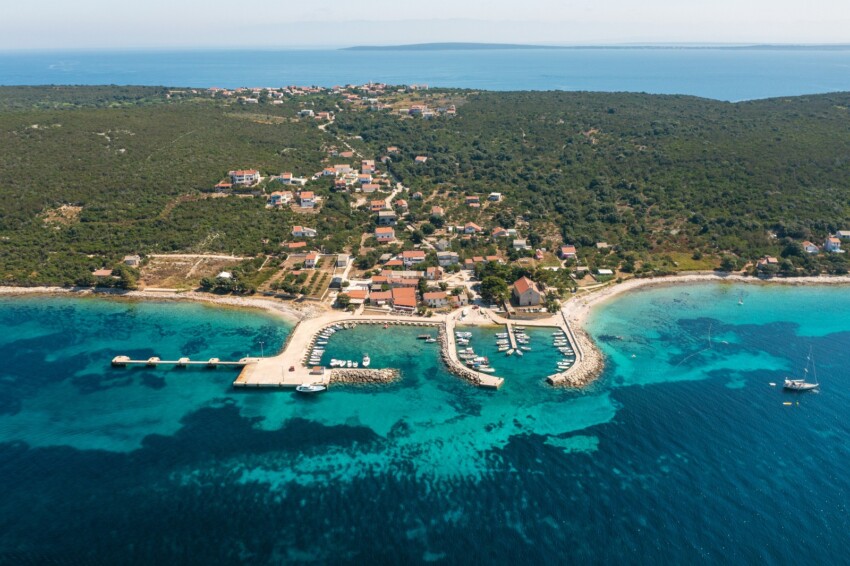
The small town of Premuda retains traditional Dalmatian architecture with limestone houses surrounded by pink oleanders and purple bougainvilleas. Narrow cobbled streets lead to the village church and post office, which also offers currency exchange services. Two restaurants serve locally caught fresh fish and Dalmatian specialities prepared according to traditional recipes.
Centuries-old olive groves are the heart of the local economy and produce one of the finest olive oils in Croatia. During the autumn, it is possible to watch the olive harvest using traditional methods. Some producers offer tastings by appointment, allowing visitors to discover the organoleptic characteristics of this extra virgin oil with its intense, fruity flavour.
The island is criss-crossed by hiking trails that lead to Vetta Vrh and other viewpoints. The walk to the summit takes about 30 minutes and offers breathtaking views of the surrounding archipelago. On a clear day, Silba, Olib, Ist and the more distant silhouettes of Lošinj and Cres can be clearly distinguished.
The karst sinkholes scattered in the north-western part bear witness to the geological processes that shaped the island during the Pleistocene. The largest, called Jama, has an entrance 100 metres in diameter and is a natural curiosity to be explored carefully. The limestone conformation of the terrain has also created small land caves that offer cool shelter during the hottest hours.
Accommodation on Premuda is limited and focuses exclusively on private flats and holiday homes run by the island’s inhabitants. This characteristic guarantees a homely welcome and the opportunity to fully immerse oneself in local life. Accommodation is distributed in the small village centre between the two harbours of Loza and Krijal, all of which can be reached on foot in a few minutes.
The flats are generally simple but equipped with all the essential comforts, with fully equipped kitchens where meals can be prepared using local products that can be bought in the two small shops on the island. Many accommodations have private terraces or gardens where you can enjoy the sea breeze and spectacular sunsets that colour the sky red and orange.
There are no hotels or resorts on the island, which has preserved the authenticity of the setting and atmosphere. It is essential to book well in advance, especially for July and August, as the limited number of available accommodations sell out quickly. The owners are often available to pick up guests at the port of Krijal with small carts to transport luggage to the flat.
Premuda can only be reached by sea from Zadar via regular connections operated by the Jadrolinija and TP Line companies. The ferry departs from the port of Gaženica in Zadar on a daily run at 14:00, reaching Premuda at 15:15 after about 1 hour and 15 minutes of sailing. The ferry covers a distance of 33 nautical miles (62 kilometres) and during the crossing also stops at the islands of Ist, Olib and Silba.
The ferry docks at the port of Krijal in the southern part of the island, approximately 500 metres from the town. For the return trip, departure from Premuda is scheduled at 07:45 in the morning, arriving in Zadar at 09:00. During the peak summer season, from June to August, the frequency of connections can be increased with additional runs, while in the winter months the service is limited to a few days a week.
Cars circulate on the island without number plates and their number is extremely limited. The small size of the island makes it possible to reach any point on foot in a few minutes, making the use of vehicles unnecessary. Accommodation owners are usually willing to help with transporting luggage from the port to the flat using small trolleys or vans.
For those travelling by private boat, the island has two harbours: Loza in the north, used mainly for private boats and yachtsmen, and Krijal in the south where scheduled ferries dock. Both ports offer mooring on buoys for a fee calculated per linear metre of the boat, but no fresh water or electricity is available for boats.
Premuda is located in theZadar archipelago, part of the southern Liburnian islands, 35 kilometres from the Croatian mainland at its closest point. The island is located 14 kilometres south of Lošinj and 27 kilometres west of the island of Pag.
 Hotel
Hotel  Budget accommodations
  Apartments
  Family Hotel
  Luxury Hotel
  Resorts