Zagreb Airport
With new management and new connections, Zagreb Airport has grown considerably. Arriving in Croatia by plane is getting easier!

Croatia has a modern and efficient airport network that facilitates access to all major tourist destinations in the country. With eight international airports strategically distributed between the coast and the interior, every traveller can find the most convenient stopover to reach their destination. Most air traffic is concentrated at the three main airports – Zagreb, Split and Dubrovnik – which together handle around 90 per cent of passengers, while the smaller airports of Pula, Zadar, Rijeka, Osijek and Brač offer strategic connections to specific tourist regions.
The summer season, from June to September, sees a surge in connections to the whole of Europe thanks to low-cost airlines such as Ryanair, EasyJet and Wizz Air, which stand alongside traditional carriers such as Croatia Airlines, Lufthansa and British Airways. During the winter months, many coastal airports drastically reduce operations, keeping only essential connections active, while Zagreb maintains a constant schedule throughout the year.
All Croatian airports are well connected to city centres by shuttle buses, public transport and taxi services, with journey times ranging from 15 to 40 minutes depending on the stopover. For those wishing to explore the country more independently, a number of car rental companies are available at each airport, which is particularly recommended for visiting islands, national parks and locations less accessible by public transport.

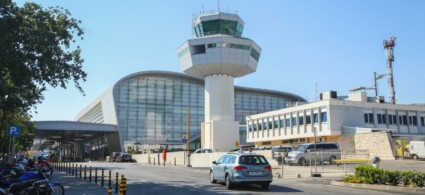
Zagreb’s Franjo Tuđman International Airport (ZAG) is Croatia’s largest and busiest airport, with over 3.3 million passengers a year. Located 17 kilometres south-east of the centre of Croatia’s capital, in Velika Gorica, this airport serves as the country’s main hub for domestic and international flights.
Completely renovated in 2019, the new modern terminal offers all the necessary amenities for travellers. The airport is Croatia Airlines ‘ main hub and serves as a strategic transit point for connections to the Balkans. The airport is accessible by car from the A3 motorway, which allows for quick connections both to the city centre and to other Croatian destinations.
Zagreb Airport is ideal for those visiting the Croatian capital and northern cities such as Varaždin and Karlovac. It is also the perfect starting point to reach the famous Plitvice Lakes, some 130 kilometres away. Due to its central location, it is also often the best choice for eastern Croatian cities such as Slavonski Brod and Osijek, although there is an airport in Osijek.

Split Airport (SPU), also known as Resnik Airport or Kaštela, is the second most important airport in Croatia with over 3.5 million passengers annually. Located 24 kilometres from the centre of Split, in Kaštela, this airport is the main gateway to central Dalmatia and its beautiful islands.
Renovated and expanded in 2019, the airport offers a modern terminal with all essential services. Its strategic location makes it ideal for visiting not only Split, but also Trogir (15 km), Makarska (57 km) and Šibenik (87 km). Air traffic is mainly concentrated in the summer season, when numerous European and charter companies operate.
Split Airport is the ideal port of call for those wishing to visit the Dalmatian islands. Ferries and catamarans to Hvar, Brač, Vis and Korčula depart from the port of Split, which is easily accessible by airport shuttle bus. In summer, connections are frequent and make it easy to organise a tour between the islands.

Dubrovnik Airport (DBV), also known as Čilipi Airport, is the third busiest airport in Croatia with almost 3 million passengers per year. Located 20 kilometres from the famous Pearl of the Adriatic in Čilipi, this modern airport is the main access point to southern Dalmatia and Montenegro.
Rebuilt after the Yugoslav war in the 1990s, the airport boasts state-of-the-art facilities and handles a large number of international flights, especially during the tourist season. A special feature of this airport is the ban on overflying the walled city of Dubrovnik, giving passengers a spectacular panoramic view during landing.
Dubrovnik Airport is perfect for exploring not only the historical city, but also the Pelješac peninsula, the Bay of Kotor in Montenegro (20 km from the border) and theisland of Korčula, which can be reached by ferry from Dubrovnik port or by direct shuttle services organised by the Korkyra company.
Pula Airport (PUY) is Istria‘s main airport, with over 700,000 passengers per year. Located just 7 kilometres from the centre of Pula, in the eastern part of the city, this airport is the ideal gateway for visiting the Istrian peninsula with its charming coastal towns such as Rovinj, Poreč and Umag.
The airport mainly operates seasonal flights during the summer months, with connections to major European destinations operated by companies such as Ryanair, EasyJet, British Airways and Croatia Airlines. For cities in northern Istria,Trieste Airport in Italy can also be an equidistant alternative.
Zadar Airport (ZAD), also known as Zemunik Airport, handles around 600,000 passengers per year. Located just 8 kilometres east of the city, this airport was among the first in Croatia to be served by low-cost airlines, in particular Ryanair, which still accounts for a significant share of traffic.
The airport is particularly convenient for visiting northern Dalmatia, including the islands of Dugi Otok and the Kornati archipelago. The modern terminal offers all essential services and sees most traffic concentrated between April and October.
Several car rental companies operate at the terminal, making access to Krka National Park (90 minutes) and Paklenica National Park easy.
Rijeka Airport (RJK) has the distinction of being located on the island of Krk, connected to the mainland by a bridge. Located in the northern part of the Adriatic, this airport serves the city of Rijeka and the entire Kvarner Gulf, including the islands of Krk, Rab, Cres and Lošinj.
The airport mainly operates seasonal summer flights, with connections to some European destinations. It is an ideal stopover for those planning a holiday on the Kvarner islands or wishing to explore the northern coast of Croatia.
Croatia has two other smaller airports:Osijek Airport7, in the east of the country, which mainly serves domestic connections and some European routes, andBrač Airport8, located on the Dalmatian island of the same name, which operates limited seasonal flights.
In the following map you can see the location of the main places of interest mentioned in this article.
To find the best fares, it is advisable to book well in advance, especially for summer flights to coastal destinations. Low cost airlines offer the cheapest fares, but it is important to check baggage policies to avoid additional costs. During thehigh season (July-August), coastal airports can be very crowded.
For those planning a touring tour of Croatia, it can be convenient to fly to one airport and depart from another. For example, arrive in Zagreb to visit the north and the Plitvice lakes, then travel to the coast and depart from Split or Dubrovnik. One-way car hire is available from major companies, although it may involve a supplement.
To reach the Croatian islands from the airport, the best solution is to combine the plane with ferries. The airports of Split and Zadar are particularly well placed for ferry connections, while services to the southern Dalmatian islands depart from Dubrovnik.


 Hotel
Hotel  Budget accommodations
  Apartments
  Family Hotel
  Luxury Hotel
  Resorts