Zagorje is a region of Croatia located in the north-west of the country, between the Croatian cities of Zagreb and Varazdin.
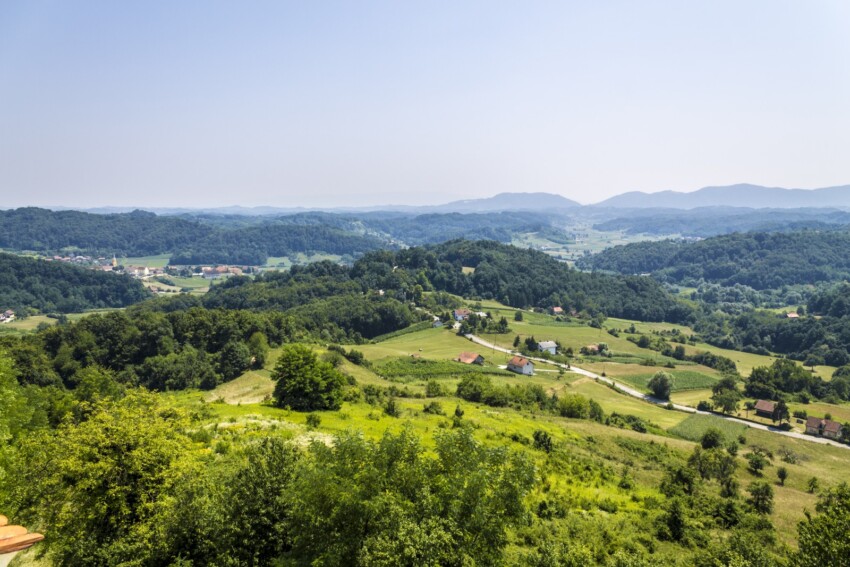
The Zagorje region is a great alternative for those who do not like the summer crowds on the Croatian coast and prefer bucolic landscapes rich in history.
In fact, here you will find rolling hills covered with vineyards that are pleasant to explore by car, medieval castles waiting to be discovered, magnificent picturesque villages and thermal springs where you can relax.
In addition, this region guarantees tranquillity, steady and cheap prices all year round and a rich and tasty regional Austrian-influenced cuisine.
In August, the area comes alive with the Spancirfest in Varazdin, with music and performances of all kinds!
In addition to Varazdin, to which we have dedicated a section on our website, we also recommend the following places in the Zagorje region.
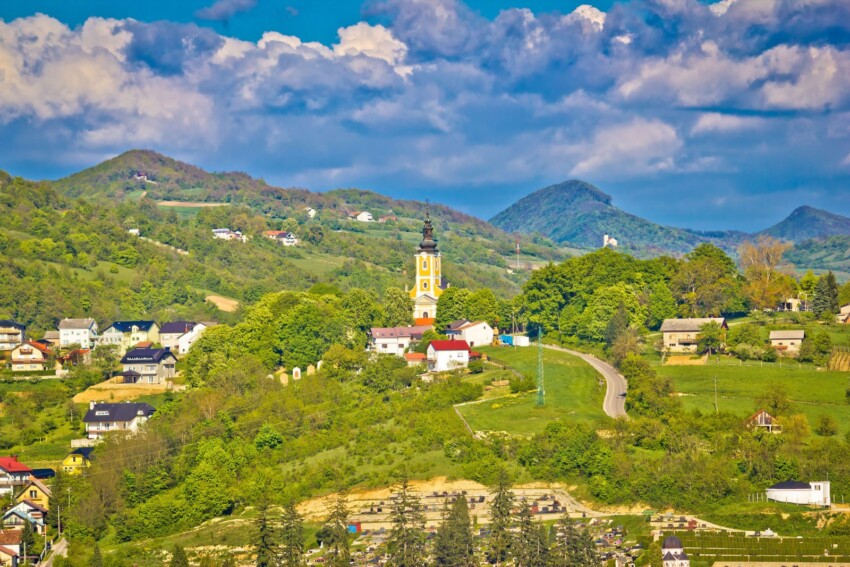
This quiet rural town is most famous for its archaeological site, the largest in Europe for the Neanderthal period, which first came to light in 1899 with the discovery of animal and human fossils.
A total of 876 human remains emerged, including 196 teeth belonging to dozens of individuals.
This recently renovated museum, built on a hill, recalls the idea of a cave and traces the history and geology of the region with informative exhibits and legends.
The tour is structured as a voyage of discovery with underground chambers, realistic dioramas, interactive games, life-size models and many information boards.
It is especially recommended for those travelling with children and young people!
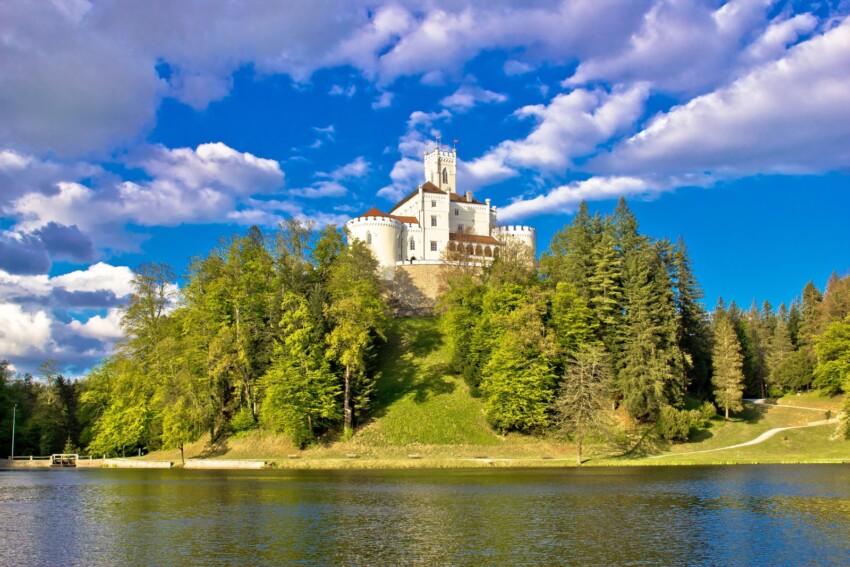
This marvellous castle, some 80 km from Zagreb, is set in an enchanting setting.
Built in 1334, it has been remodelled in the Neo-Gothic style and is surrounded by 87 hectares of grounds, a lovely romantic English-style park enriched with exotic trees and a delightful artificial pond.
The three floors of the castle have all the original furnishings and portraits: you can admire magnificent rooms in different styles, Neo-Renaissance, Baroque and Gothic.
The collection of swords and firearms and the period kitchen are worth seeing.
To relax, you can take a walk along the park paths to the lake where you can hire a pedalo.
To get to this picturesque castle you have to walk through a beautiful landscape: winding hills, forests, vineyards and wheat fields – ideal for photography enthusiasts!
Veliki Tabor Castle is one of many castles built throughout Croatian history to defend against Turkish invasions, dotting the landscape with military outposts.
Built on an earlier medieval structure with a pentagonal plan, it was over time strengthened with four semi-circular towers. Strategically positioned, it is equipped with all the defensive accouterments such as loopholes, turrets, towers and emplacements for throwing boiling oil on attackers.
Don’t forget to see the skull of Veronika Desinic, a village girl who, according to legend, was walled up alive in the castle for having had an affair with the castellan’s son.
In September, the castle hosts a medieval fair with hunting tournaments, sword duels and ancient dances.
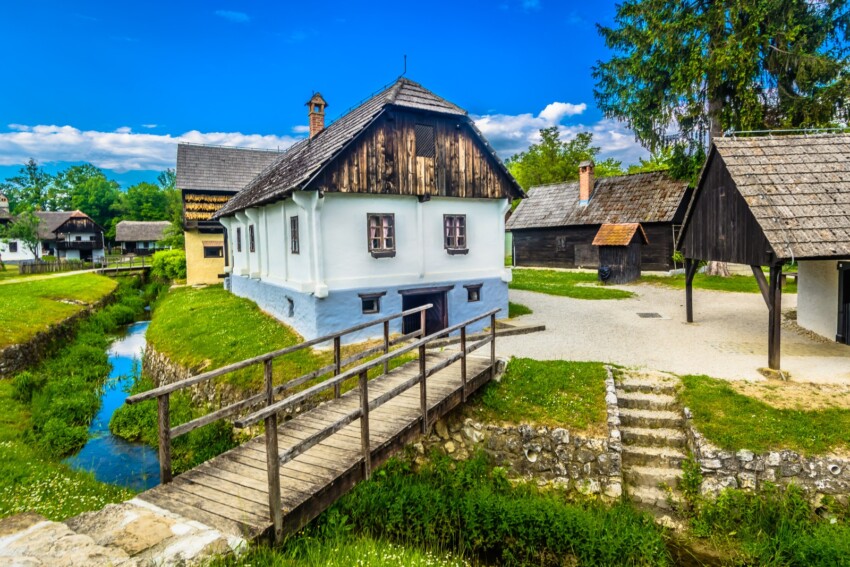
This charming village is a veritable open-air ethnographic museum.
You can visit some 40 traditional wooden and rammed-earth houses and barns, the hize, rural houses of Zagorje, in which old toys, mannequins, furniture, tools of the trades such as wine presses and baker’s tools are on display, evoking the original surroundings and showing a glimpse of the arts, crafts and customs of this region.
It is an ideal bucolic setting to visit with the family, and on weekends from April to September the village comes alive with blacksmiths, weavers, potters and candlemakers at work.
The pretty town of Klanjec was the birthplace of a famous Croatian sculptor, Antun Augustincic, author of the Peace Monument that stands in front of the United Nations Building in New York.
In addition to visiting the gallery dedicated to his work, you can also visit the very picturesque town surrounded by greenery and characterised by a beautiful Baroque church and Franciscan monastery.
People come to Stubicke Toplice to relax!
In fact, it is the closest spa resort to Zagreb, from where most visitors come.
Here, 69° water gushes out of the rock strata and you can relax in the pools, eight outdoors and one indoors, which offer temperatures between 32° and 36°.
Massages and treatments against rheumatic and muscular ailments are also available.
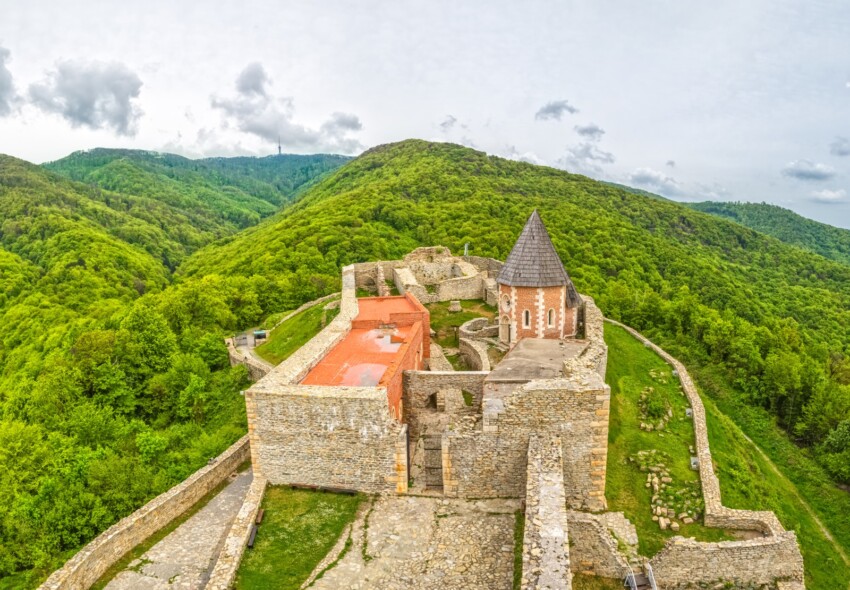
Just north of the capital is Mount Medvednica, an ideal destination for hiking enthusiasts.
You can ascend it by funicular railway or via a marked path from the base of the funicular.
The mountain is surrounded by magnificent vineyard-covered landscapes, and the famous Medvegrad Castle is a short distance away.
Route: 200 km | Duration: 1 week
Recommended period: spring and autumn
The small capital is a real discovery for many, so rich in attractions, young and dynamic.
Moreover, just a few kilometres away is an idyllic landscape of lush green meadows, expanses of vineyards, fairytale castles and magnificent picturesque villages.
Needless to say, the best time to visit these areas are the mid-seasons, spring and autumn, which light up the nature of the Zagorje region with superb colours!

Depending on your pace, you may decide to devote one or two days to the capital: although very small, Zagreb is rich in museums, art and an intense nightlife.
A pleasant alternative is to spend a day in Samobor, a charming little town nestled in the countryside, or you can explore Maksimir Park: 18 magnificent hectares of forests, avenues, meadows and artificial lakes
Heading towards the Zagorje region, you will be enchanted by the beautiful bucolic landscape of pastures, farms and forests. The first stop is Klanjec and Kumrovec, which will show you the traditional life of this part of Croatia.
Don’t miss the scenic route to Veliki Tabor Castle– you will see the best of the landscape in this area!
History lovers won’t want to miss Krapina Prehistoric Museum, the largest in Europe for the Neanderthal period.
The Castle of Trakoscan will leave you open-mouthed with its incredible beauty. You can also take a wonderful walk through its lush gardens!
Finally, head to Varazdin, a wonderful Baroque town that retains the splendour of its former noble past!
Zagorje is a region of Croatia located in the north-west of the country, between the Croatian cities of Zagreb and Varazdin.


 Hotel
Hotel  Budget accommodations
  Apartments
  Family Hotel
  Luxury Hotel
  Resorts