Apartment Ajla
Tuzla - Obala Zmaja od Bosne 32
Book now
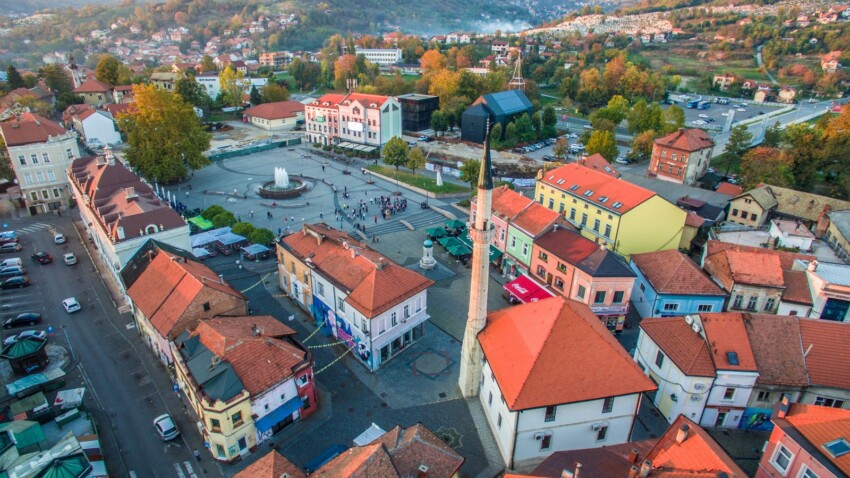
In the heart of north-eastern Bosnia and Herzegovina lies Tuzla, the country’s third largest city with over 110,000 inhabitants, surrounded by the Majevica, Ozren, Konjuh and Javornik mountains. This industrial city hides a treasure unique in Europe: the Pannonian Lakes (Panonsko Jezero), the only salt lakes on the continent located in the city centre.
The name Tuzla derives from the Turkish word ‘tuz’, meaning salt, evidence of a millennial vocation related to the extraction of salt from the subsoil. It is precisely this resource that has shaped the city’s identity through the centuries, from Ottoman rule (1463) to the Austro-Hungarian Empire (1878), to modern times.
In the last two decades, Tuzla has managed to reinvent itself by turning an environmental problem – erosion caused by salt mines – into a tourist opportunity. The creation of artificial salt lakes between 2003 and 2012 brought the city prestigious international recognition, including the UNWTO Ulysses Award 2012 for innovation in tourism.
Today, Tuzla offers visitors a fascinating mix of Austro-Hungarian architecture, Ottoman heritage and modernity, with its colourful buildings, historic mosques and the lively student atmosphere of Tuzla University. Hot summer days see locals and tourists alike relaxing on the city’s beaches, a unique phenomenon that makes this city a special case in the European tourist scene.
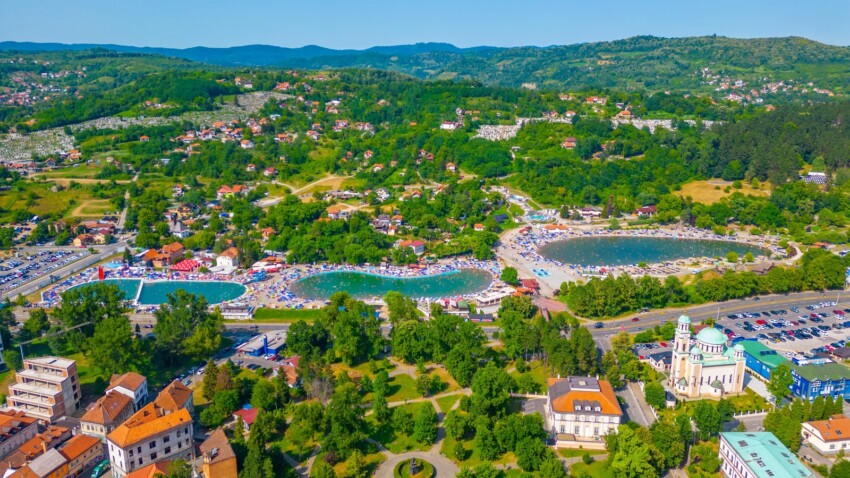
Tuzla concentrates its attractions in a relatively small area, allowing you to explore the old town on foot in a few hours. The city is divided between the salt lakes, the real beating heart during the summer season, and the old town with its colourful buildings and vestiges of the Ottoman and Austro-Hungarian past.
The Pannonian Lakes are the main attraction of Tuzla and unique in Europe. The complex comprises three artificial lakes of varying size and depth, created between 2003 and 2012 by exploiting the salty underground aquifers. The salt-rich mineral water is extracted from underground wells and circulated continuously through sand filters to ensure purity.
The therapeutic properties of the water are renowned for the treatment of infertility, rheumatic disorders and respiratory problems. During the summer (June to August), the lakes are transformed into urban beaches with well-equipped establishments, umbrellas, sunbeds and full services.
One of the special features of the complex are the Saltwater Falls, five waterfalls and two thermal pools that serve as an outdoor inhalation centre. Inhaling the saltwater vapours helps to reduce stress, improve respiratory health and alleviate headaches. During the summer, they also host concerts and music festivals that enliven the Tuzlesian evenings.
Next to the lakes is an archaeological park with a reconstruction of a Neolithic village on stilts, evidence of the ancient settlements dedicated to salt production. The nine recreated huts offer a fascinating perspective on the region’s 6,500 years of history.
The old town of Tuzla retains the charm of Austro-Hungarian architecture with its colourful Art Nouveau and Art Nouveau buildings. Strolling through the cobbled streets, you will discover small mosques, traditional cafes and craft shops. The main pedestrian artery is Korzo, lined with colourful buildings where students and locals gather for shopping or to relax in the many outdoor cafés.
The old town is literally caving in on itself due to the intensive exploitation of underground salt mines, which have created sinkholes underground. This unique geological feature lends a sense of urgency to your visit, making each historical building even more valuable.
The Turalibeg Mosque dates back to the 16th century and is considered a national monument in Bosnia. Its most curious feature is its location on silt: the building gradually began to sink, necessitating a major restoration completed in 2007. The architects skilfully preserved the original Ottoman features while also adding modern elements to the building, creating a fascinating contrast between tradition and contemporaneity.
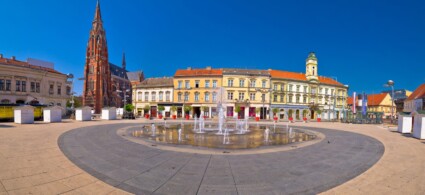
Freedom Square is the social heart of Tuzla, surrounded by important historical and cultural buildings. Here stands the Piyale Pasha Mosque and St Nicholas Cathedral, testimony to the multi-religious coexistence that characterises the city with its Bosnian, Serbian and Croatian communities. The square is a meeting point for locals and visitors, particularly lively during summer evenings.
Slana Banja Park rises above the salt lakes and is both a relaxing green area and a place of remembrance. Built during the socialist era as a memorial cemetery for World War II partisans, it now houses several memorials. The most poignant one commemorates the 25 May 1995 massacre, when a bombing hit a youth gathering place, killing 71 young Bosnians.
Despite the commemorative atmosphere, the park is described by visitors as one of the most rejuvenating spaces in the city, ideal for peaceful walks away from the hustle and bustle of the centre.
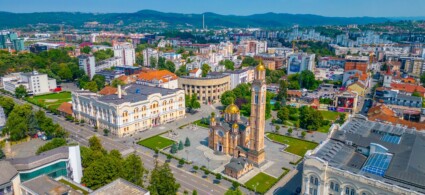
The Kapija is the imposing green gateway that marks the entrance to the old city, built by the Austrians in the 19th century with a beautifully decorated exterior. It stands at the end of the Korzo pedestrian street and is one of the photographic symbols of the city. Not far away is the Orthodox Dormition of the Mother of God Cathedral, dating from 1926. The onion-domed church impresses with its interior featuring athree-tiered iconostasis and walls decorated with colourful images of saints.
Opened in 1947, the Museum of Eastern Bosnia houses some 50,000 objects covering 6,500 years of regional history. The collections range from archaeological significance with prehistoric finds, to ethnographic exhibits on traditional life, to contemporary local art. The museum is open from 8 a.m. to 3 p.m. Monday to Friday, closed on weekends.
Tuzla’s accommodation offer is mainly concentrated in the city centre, where you will find boutique hotels, bed & breakfasts and family-run guesthouses. The most popular accommodations are a few minutes’ walk from the salt lakes.
Prices are generally affordable, but during the summer, when the lakes are open to the public, it is advisable to book in advance to secure the best accommodation in the city centre.
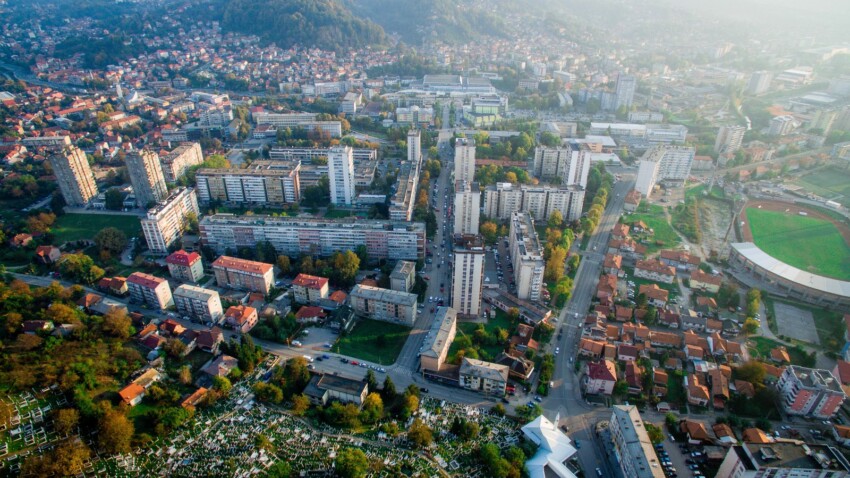
Tuzla is located in north-eastern Bosnia and Herzegovina, about 120 km from Sarajevo and 84 km from the capital’s airport.Tuzla International Airport (TZL) is 14 km from the city centre and is the second most important airport in the country. The airport is the hub of the Wizz Air company, which offers direct connections to several European cities, especially during the summer season.
From the airport, you can reach the centre by taxi or direct shuttle buses to Tuzla, Sarajevo and Banja Luka. Most visitors arrive in Tuzla fromSarajevo Airport (77 km), which is best served internationally by Austrian Airlines, Lufthansa and other European airlines.
Bus connections to Sarajevo are frequent and convenient: 12 daily departures with journey times of around 2 hours and costs starting from 14-15 euros. The Centrotrans Eurolines BiH company guarantees regular services from the Sarajevo bus station. For those who prefer autonomy, car rental is the ideal solution for exploring the surroundings of Tuzla, with numerous agencies available at airports.
Just a 30-minute drive away is Srebrenik Castle, considered the best-preserved medieval castle in Bosnia. Built in 1333 on an isolated rock, giving it an almost impregnable natural defence, the castle was abandoned in 1378. Equally fascinating is Gradačac Castle, about 30 minutes from Tuzla. This imposing 18-metre-high white fortress was built between 1765 and 1821 and is recognisable by its soaring tower. The castle is of great historical importance: it was here that the local general gathered the Bosnians to defend themselves against the Turks, driving the Ottomans out of Kosovo. The white façade, wooden balconies and fortification walls make it one of the most photographed destinations in the region.
For nature lovers, the Sutjeska National Park, located some 80 km away, offers hiking trails and the chance to explore one of Europe’s remaining primeval forests. Those wishing to discover other Bosnian cities can easily reach Sarajevo in 2 hours, or travel as far as Mostar (about 150 km) to admire the famous Old Bridge.
What's the weather at Tuzla? Below are the temperatures and the weather forecast at Tuzla for the next few days.
 Hotel
Hotel  Budget accommodations
 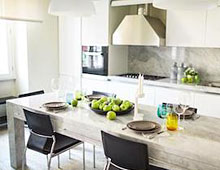 Apartments
  Family Hotel
 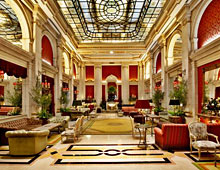 Luxury Hotel
 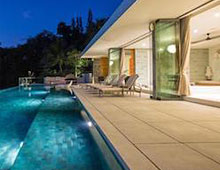 Resorts