Hotel Vidović
Banja Luka - Ivana Franje Jukića 11
Book now
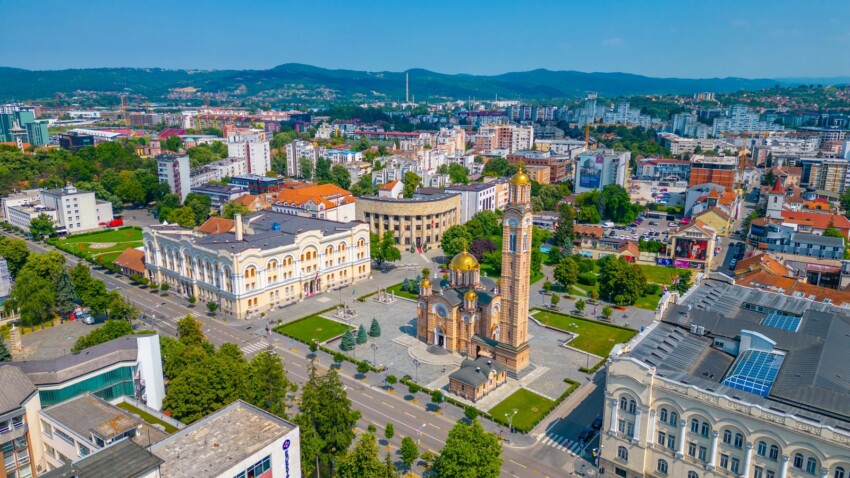
In north-western Bosnia and Herzegovina, nestled on the banks of the Vrbas River, lies Banja Luka, the country’s second largest city with over 220,000 inhabitants. The capital of Republika Srpska, this city represents a fascinating crossroads between East and West, where Roman, Slavic, Ottoman and Austro-Hungarian influences merge.
The name Banja Luka means ‘Ban Valley’ and is derived from the words ‘ban’, a medieval title given to a dignitary, and ‘luka’, meaning valley or meadow. The town is first mentioned in a 1494 document signed by Hungarian King Vladislav II, but its origins date back to Roman times, when the area was part of the province of Illyricum.
What is immediately striking about Banja Luka is its greenery. The city is dotted with tree-lined boulevards, gardens and parks that tempt inhabitants and visitors alike to get around by bicycle or on foot. Not surprisingly, many call it the ‘city of green’, an unexpected oasis in a region often associated with mountainous and rocky landscapes.
Banja Luka’s recent history is marked by two traumatic events: the earthquake of 27 October 1969, which destroyed 85% of the buildings, leaving only a few survivors of the Ottoman and Austro-Hungarian legacy, and the war of the 1990s, during which all sixteen historic mosques (15th-16th centuries) were destroyed by Serbian nationalists. Despite these dramas, the city was reborn and today offers visitors an interesting combination of modern architecture, memorial sites and evidence of its multicultural past.
Banja Luka concentrates its main attractions in an area easily explored on foot. The city centre is built around the Vrbas River and the main square, offering visitors a mix of historical monuments, modern buildings and green spaces. Most of the attractions can be visited in a weekend, although the surroundings are definitely worth a few more days.
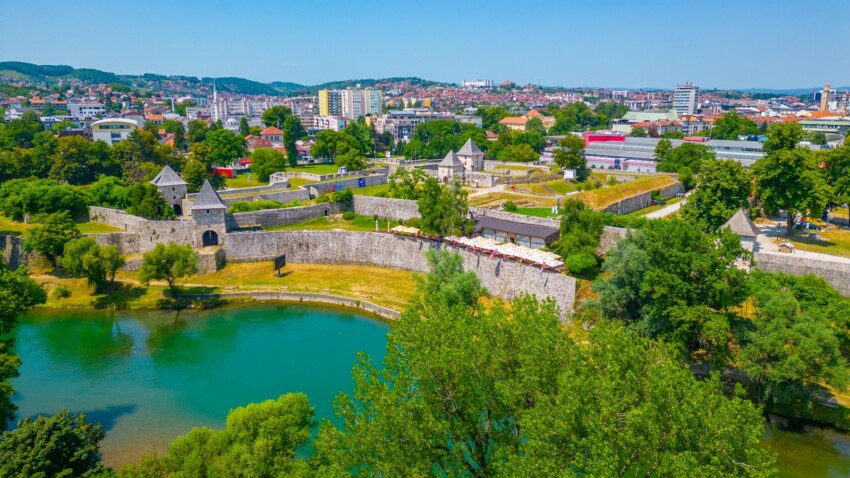
The Kastel Fortress is the oldest historical monument in the city and stands in the centre, overlooking the calm waters of the Vrbas River. Originally built during the Roman settlement, what we admire today is the reconstruction that took place in the second half of the 15th century. The former fortress was smaller than the present one and some of the relics found inside are part of a small museum that includes bronzes and ceramics.
The fortress walls served for centuries as a physical defence for the inhabitants and today represent a reminder of past times and traditions. The area has undergone a good restoration and remains a place to visit, especially in the evening, when with the soft lighting it acquires a special charm. During the summer months, numerous cultural events and open-air shows are organised within the walls.
The Ferhadija Mosque is one of the most powerful symbols of Banja Luka’s renaissance. Built in 1579 in the Ottoman style, it was listed as a UNESCO heritage site in the 1950s but was completely destroyed during the conflict in the 1990s. Reconstruction, which began in 2006, was completed in May 2016 and is an extraordinary example of how architecture and reconciliation can go hand in hand.
The attempt to rebuild the mosque led to mass riots by Serb nationalists on 7 May 2001, which resulted in serious incidents, but the determination of the international and local community made it possible to complete the work. Today, the mosque is located in the city centre and its architectural beauty does not go unnoticed, representing an important place of memory and hope.
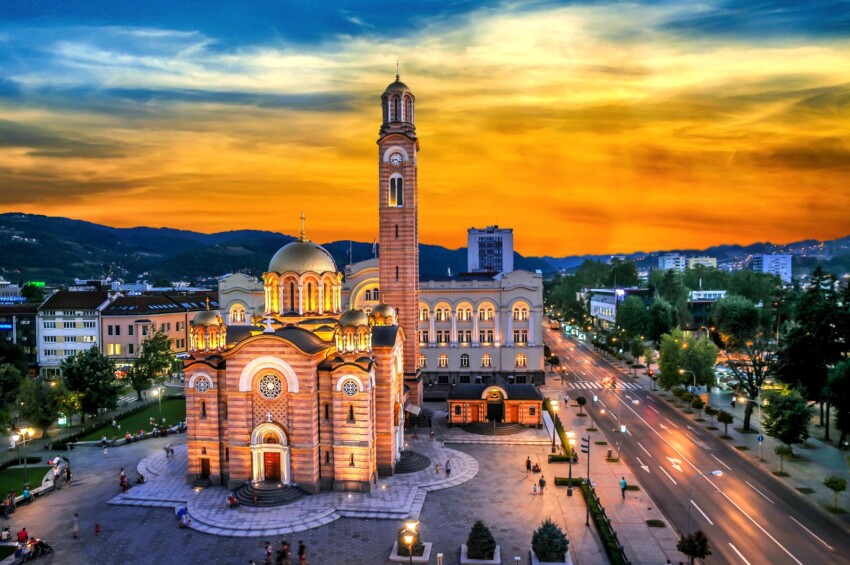
The Orthodox Cathedral of Christ the Saviour is a masterpiece of neo-Byzantine architecture built between 1993 and 2004. It stands on the site of the old Holy Trinity Church, destroyed during World War II in 1941 at the hands of Croatian Ustashas. The cathedral dominates the city centre with its golden domes and is a perfect example of religious architecture that dialogues harmoniously with the surrounding modern buildings.
The interior is beautifully decorated throughout, with a three-tiered iconostasis and walls adorned with colourful images of saints. The cathedral was visited by Pope John Paul II in 2003 during a papal visit to Bosnia and Herzegovina. Admission is free.
The City Park is a green oasis in the heart of the city and covers a vast area of 70 hectares. This beautiful park is perfect for a relaxing walk or to enjoy leisure time surrounded by nature. Inside you will find a variety of walking paths that lead you through picturesque landscapes, ornamental fountains and well-kept gardens.
You can take a pleasant stroll along the banks of the Vrbas River, which flows through the park, admiring the beautiful landscapes along the way. The City Park is also home to numerous points of interest, including a large outdoor chessboard, an open-air theatre and an artificial lake with a viewing terrace.
Trg Krajine is the main square in Banja Luka, a meeting place for locals. The central square, built in modernist socialist style after the 1969 earthquake, is surrounded by government and commercial buildings. Here you will find the Boska shopping centre and several cafés where locals gather to spend the evening.
The city is famous for its nightlife, a feature that young visitors will love. The numerous clubs on the square and surrounding streets come alive especially at weekends, creating a lively and cosmopolitan atmosphere.
The Museum of the Republic of Srpska, formerly the Art Gallery, was opened as a museum in 2004. The old museum was reborn thanks to numerous donations from local artists following the devastating earthquake of 1969 that destroyed most of the collections. The museum is housed in a monumentally Brutalist building that represents an interesting example of socialist architecture.
It houses more than 1,300 works of art, including sculptures and paintings, dating mainly from the second half of the 20th century with a small section devoted to works from the first half of the 20th century. The museum alternates modern exhibitions equipped with interactive displays with more traditional ones, creating an interesting contrast in time.
The Trappist Monastery is located a few kilometres from the centre and is one of the most fascinating places to visit in the immediate surroundings of Banja Luka. Founded in 1869 by monks of the Cistercian order from the German Mariawald Abbey, the monastery brought the premises of industrialisation to the Ottoman city.
The Trappists were the first to brew beer in Banja Luka (the now famous Nektar is an offspring of this tradition) and even built a hydroelectric power plant on the Vrbas River in 1892, bringing electricity to the city for the first time. After the 1969 earthquake, the building suffered extensive damage but was renovated. Today, only two monks remain, but the abbey church remains one of the most visited places. You can buy Trappist cheese and their famous beer.
The President’s Palace was built during the reign of Ban Svetislav Milosavljević in 1936 and is today included in the list of national monuments of Bosnia and Herzegovina. The building is a remarkable example of the architecture of the period and is surrounded by well-kept gardens. Although it cannot be visited inside, its imposing façade is certainly worth a visit and a photograph.
Banja Luka offers a wide range of accommodation options, from large hotels in the city centre to cosy bed & breakfasts in residential areas. Most visitors choose to stay in the city centre, where the main services, restaurants and attractions are concentrated. This area is ideal for those who want to be within walking distance of the Kastel Fortress, the main square and the best nightclubs.
The slightly more peripheral Borik area offers accommodation in quieter and greener areas, perfect for families and those looking for a relaxing stay while remaining well connected to the centre by public transport. Here you will find different types of accommodation that offer good value for money.
For those travelling by car and wishing to explore the surroundings, residential areas such as Starčevica and Nova Varoš are excellent bases. These areas offer free parking and more spacious accommodation, ideal for longer stays or for those who prefer flats with kitchens.
Accommodation prices in Banja Luka are generally very affordable by European standards, making the city an attractive destination even for those travelling on a tight budget. The city offers solutions for every need: from a small budget hostel to a comfortable mid-range hotel to more luxurious accommodation with spa and wellness facilities.
Banja Luka is located about 150 km from Sarajevo and is an important transport hub in northern Bosnia and Herzegovina.Banja Luka International Airport (also known as Mahovljani Airport) is located about 25 km northeast of the city centre. Currently the main air connection is operated by Air Serbia with flights to Belgrade, while the low-cost airline Ryanair offers seasonal connections to several European cities, including Milan Bergamo.
From the airport there are unfortunately no direct buses to the city centre. You will have to take a taxi or walk about 800 metres to the main street, where you can catch a local bus to Banja Luka. Taxis from the airport to the centre cost about 20-25 euros and the journey takes about 30 minutes.
Most visitors arrive in Banja Luka fromSarajevo Airport (149 km), the country’s busiest and best connected to major European cities. From Sarajevo, frequent buses connect the two cities with a journey of about 3-4 hours. Buses leave from both the main station and Lukavica station.
For those travelling from Italy or Croatia, a good option is to reach Zagreb and from there take a direct bus to Banja Luka (about 4-5 hours). Bus connections are frequent and convenient, with prices starting from 15-20 euros. Bosnia and Herzegovina’s bus network is extensive and reliable.
If travelling by car, from Zagreb you follow the A3 to the Bosnian border, then the M14, which takes you directly to Banja Luka through beautiful mountain and valley landscapes. The journey is scenic but bear in mind that some side roads may not be in perfect condition. It is advisable to travel during the day and make frequent stops.
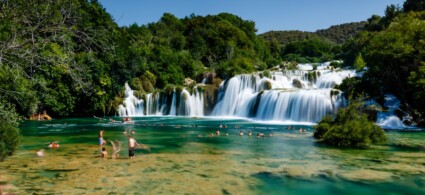
The surroundings of Banja Luka offer some of the most spectacular natural attractions in Bosnia and Herzegovina. Just 25 km from the city is Krupa na Vrbasu, a village included in the 2022 UNWTO (World Tourism Organisation) list of “52 Best Tourist Villages”. This hidden gem boasts crystal-clear waterfalls, old wooden watermills and the 13th century St Elias Monastery, considered an endowment of Stefan Nemanja.
The village can be reached along the M16 road towards Jajce and offers numerous activities: you can hike along the paths that run alongside the waterfalls, go rafting in the Vrbas canyon or simply relax by fishing. Not far away is the Stone Bridge (Kameni Most), a 70-metre-high natural geomorphological phenomenon that is one of the most important climbing areas in Bosnia and Herzegovina, with around 40 routes of varying difficulty.
Continuing south for about 50 km, you will reach Jajce, one of the most charming medieval towns in the country. Jajce is famous for its spectacular 20-metre-high waterfall that plunges directly into the town centre, a phenomenon unique in Europe. The town is also home to a perfectly preserved medieval castle, catacombs and the picturesque Pliva River waterfalls with their traditional watermills.
For those interested in nature and history, it is worth travelling as far as Mostar (around 200 km) to admire the famous Old Bridge, or to visit the sanctuary of Međugorje (around 180 km), one of the most important Marian pilgrimage sites in the world. Both destinations are easily reached within a day by hire car or organised tours.
Fans of rafting and adventure sports will find the Vrbas canyon one of the best spots in the Balkans. The river regularly hosts world rafting and kayaking championships, and numerous local agencies offer guided tours for all levels of experience.
Banja Luka is located in north-western Bosnia and Herzegovina, in the historical Bosanska Krajina region, on both banks of the Vrbas River. The city is 150 km from Sarajevo, 200 km from Mostar, 220 km from Zagreb in Croatia and about 180 km from Split on the Croatian Adriatic coast.
 Hotel
Hotel  Budget accommodations
  Apartments
  Family Hotel
  Luxury Hotel
  Resorts